
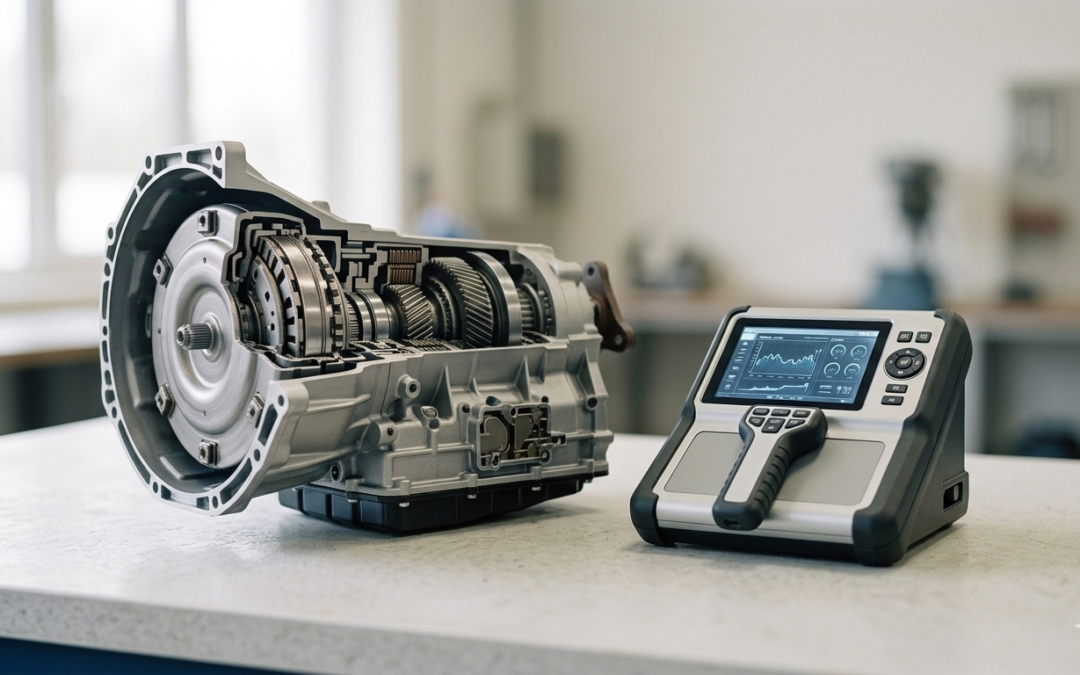
For any Canadian driver, repairing or replacing a car’s transmission is no small matter. It’s one of those automotive quandaries. This guide aims to assist you in making that decision. We’re going to run the whole gamut, from basic maintenance checks to a complete rebuild, so you can make an informed decision about whether needed gearbox repairs or a full replacement is in order, and ensure your ride runs at optimal performance and value on Canadian roads.
Understanding Transmission Woes: Diagnosis is Your First Step
You have to know what is actually wrong before you even think about repair or replacement. That’s where a good mechanic and some solid diagnostic equipment will be your best friend. Transmission issues can creep up on you unexpectedly, as minor performance issues or, worse, a full-on breakdown. The symptoms you’re observing are the first clues that could lead to a possible solution. Some of the common issues are, as always:
Rough shifting:
When changing gears, your car feels as if it clunks or hesitates. This is what makes the car move. Strange noises—Whines, hums, or grinding sounds that vary with speed or selection of gears. Typically, these are symptoms of bearing wear or gear failure.
Fluid leaks:
Puddles of reddish or brownish fluid under your car can definitely mean that something is wrong. Neglecting it may lead to severe internal harm. Burning smell– That unmistakable burnt smell could be transmission fluid overheating due to worn parts creating friction, or the level being low.
Warning signs:
Dashboard lights (Check Engine or a specific transmission light are not just for cool images; they mean the car’s computer has detected a fault.
Real-World Scenarios: Transmission Decisions in Action
Seeing how these decisions play out in real life can really help clarify things. Here are a few Transmission Rebuilds, as these entail disassembling the transmission, inspecting all components, replacing damaged parts (such as clutch packs, seals, bearings, and perhaps even gears, and reassembling it.
Pros:
- This can be more budget-friendly than a replacement transmission if only some parts are bad.
- Preserves your factory transmission in your vehicle, which some owners want
- Whatever is inside is checked to warn you of changes early.
Cons:
- The actual quality is contingent on the technician’s skill and the components they use.
- Once taken apart, you may find more hidden damage, which will cost extra to cover.
- It will keep your automobile out of commission for a bit.
Transmission Replacement:
That involves putting a completely different transmission unit in your engine – whether new, remanufactured (upgraded, or used.
Pros:
- Typically, faster than rebuilding, as you are replacing it with an assembled unit
- Costs are generally more well-known, particularly for new or remanufactured units.
- New and reman transmissions often come with some stiff warranties.
Cons:
- Typically, the most expensive option is a new transmission.
- Used transmissions for the lowest cost but also the highest risk — their history is not always dry.
- New ones are not always available for older or lesser-known cars.
- If the damage isn’t extensive and your car isn’t a relic, patching up or selective rebuilding could suffice. In a high-mileage vehicle with extensive internal damage, a remanufactured replacement is often the optimal balance of reliability and cost. A used one can be a cheap way to get you home after a catastrophic failure. Once again, bear in mind the risks; it’s much better to invest in something that has been remanufactured. P.S. All of this is part of the transmission decision guide puzzle.
Transmission Decisions: Real-World Scenarios
It is when we see how these decisions are made that the point really becomes clear. These are some of the most common situations Canadian drivers will encounter when facing transmission trouble.
Scenario 1: The High-Mileage Workhorse
- 2012 Dodge Ram 1500 — 350,000 km. Used daily for contracting.
- P0713 OBD-II Trouble Code: Transmission Fluid Temp Sensor Circuit High Input. Problem: Slipping in higher gears, hard shifts, and a burning smell. Transmission Fluid Temp Sensor Circuit High Input
- Diagnosis: Internal wear (clutch packs, etc.
- Choices: Service ($3,500, 1yr warranty, Remanufactured ($5,500, 2yr warranty, or Used ($2500-$3500, multiple-90 day warranty
- Vehicle Value: ~$8,000 CAD.
- Reliability is everything for a work truck. A used unit is too risky. Sounds like one of those repairs that are tempting, but within a certain mileage and level of use, it’ll fail again. The rebuilt transmission is probably the best bet here. It is a significant expense, but the extended warranty and new internals give the best shot at staying in business headache-free.
Scenario 2: The Old Family Sedan Ready for Retirement
- Vehicle: Toyota Camry 2010→ 220,000 kms Mostly city driving.
- Issue: Thunk when going into Drive/Reverse, along with intermittent hesitation.
- Diagnosis: Transmission mounts worn, computer module (TCM failing. Fluid is clean.
- Choice: Repair ($1200 for mounts & TCM, 1yr warranty) or Full Rebuild/Replace (from $4000).
- Vehicle Value: ~$6,500 CAD.
- There is no question here for transmission repair. What has been discovered is specific and every bit repairable, with the cost—relative to the car’s value—quite low. When the problems are this calculable, and stretch out a car’s life into the hundreds of thousands of miles without costing some ludicrous amount to do so.
Scenario 3: The Weekend Warrior
- With approximately 75,000 km on the clock, this is a clean, low-kilometer example of a 2018 Ford Mustang GT—driven hard, occasional track days.
- Issue: Track hard acceleration slipping, check the engine light
- Diagnosis: Above normal and burnt clutch plates due to track stress.
- Options: Standard Rebuild $4,000 (Standard Warranty, Performance Rebuild: $6,000+ (Upgraded Parts, Better warranty. Used/New Replacement. (Save for when you have a second car and want to tune the first one
- Vehicle Value: ~$30,000 CAD.
- The Grade: For track day drivers, a stock rebuild won’t do the job. And the owner does need some gear that can take the stress. Go with the performance rebuild. It takes care of the present damage and gets the parts to modern-spec ready for track use, which is why this car exists in its owner’s eyes.
- These are just a few examples, and these factors are all subjective and vary greatly based on your car, how you use it, and your finances.
Key Insights
- A thorough, professional diagnosis is priority number one. It is the bedrock for any intelligent decision.
- A transmission with isolated issues may be fixable, but don’t nickel-and-dime something that’s going to fail miserably.
- Based on my experience, remanufactured transmissions usually strike the best balance between replacement reliability and cost.
- Always compare repair/replacement costs to your car’s value and how much longer you plan to keep it.
- The best part of the purchase is a solid warranty; it’s your shield against any trouble that may come your way.
- Frequent fluid changes and conscious driving behavior are the cheapest kind of transmission insurance.
- We have different climates and road conditions that affect transmission longevity and repair costs.
Frequently Asked Questions
How do I know if my transmission is on the way out?
You will most likely see some obvious red flags. These include gears slipping (i.e., the engine revs but there is no corresponding increase in speed, harsh or delayed gear changes, whining or grinding noises that vary with vehicle speed, burning smells that hint at a fluid burning, tangible fluid leaks beneath your car, and warning lights on your dashboard. If any of these happen, don’t delay taking it to a certified mechanic.
How is a transmission repair different from a rebuild?
Whenever we get a repair, that is fixing something in particular – maybe a sensor on the blink, a small seal drip, or a free solenoid issue. It targets a handful of components or one component. A rebuild is a far more involved process altogether. It is essentially disassembled, internal components are inspected, worn or damaged items (like clutch packs, bearings, and gaskets are replaced, and then it is all reassembled—carefully. So you’re totally resetting the transmission’s internal mechanics as if it were new.
Is a rebuilt transmission just as good as a new one?
A professionally remanufactured transmission, rebuilt to original equipment manufacturer (OEM specifications using new or reconditioned parts, is just as reliable as a brand-new unit. And they often come with great warranties – in some cases, similar to factory-type warranties- and usually cost substantially less than a brand-new transmission. The quality all depends on the skill and standards of the business performing the reconstruction.
How long does a car transmission usually last?
This can vary, but generally, automatic transmissions can last from 150,000 km to well over 300,000 km with proper maintenance. Many manual transmissions go even further than that, often well over 250,000 km if driven gently and serviced properly. But your mileage will, of course, depend on factors like driving patterns, maintenance habits, and the exact make and model of car you drive.
Should I be able to fill my transmission fluid to the low level?
Topping up the fluid only temporarily helps with many symptoms, but if the fluid is low, it nearly never fixes them permanently. A low level almost always indicates a leak somewhere in the system or internal issues causing fluid loss or contamination. Adding more liquid does not solve the underlying problem. If you are losing liquid, locate the leak and repair it, or find the underlying issue. Keeping a transmission low on fluid can cause it to fail very quickly.
Should I replace my transmission, or get a new, old car?
It’s an important question, but the answer is as follows: we trained on data up to Kokonoto 2023. Typically, if a transmission repair or replacement approaches or exceeds 50% of your vehicle’s market value, it may be in your best interest to use that money toward a different vehicle (especially an older one or one with other issues waiting around the corner). If you like your car, it’s otherwise in good shape, and you plan to keep it for years, a good transmission is likely a worthwhile investment. Compare quotes regularly and seek a licensed evaluation of your automobile’s condition.
Conclusion
Transmission repair vs replacement is certainly one of those larger automotive decisions that comes with a degree of stress. In Canada, where vehicles serve more as essential lighthouses than mere vessels of transportation, it weighs heavily on the mind. The moral of the story, at least in my reading, is that this issue is not black and white; it depends entirely on your own circumstances. Ultimately, it comes down to listening to reliable information, obtaining multiple professional opinions & quotations, and purchasing goods with an understanding of the warranties that align with your own requirements and budget. So, by the time you consider this decision, just take it and make sure that whatever path you choose at least serves your good and your car’s, allowing you both to roll easily on a Canadian road for years.