Your brakes are giving you a warning right now — and most Calgary drivers are not hearing it.
According to the National Highway Traffic Safety Administration (NHTSA), brake system issues are a factor in roughly 22% of crashes caused by vehicle component failure. That is not a small number. And in Calgary, where winter road conditions can shift from dry pavement to black ice in under an hour, a brake system that is even slightly compromised puts every trip at risk. Experienced auto repair professionals in Calgary agree that early detection saves both money and lives.
Fortunately, brakes almost always notify you before they break down. Catching squeals, grinding noises, vibrations, or warning lights early can mean the difference between a $150–$300 brake pad replacement and a $500–$800+ brake repair involving rotors, calipers, and fluid service. (My Calgary Mechanic, 2025).
This guide covers the 7 warning signs that need your attention, what each one actually means, and when it becomes an emergency. After reading this, you will know exactly what to do and what it will cost if you wait.
| Not sure about your brakes? Mighty Auto Repairs offers a free visual brake inspection — find a mechanic near me today with no obligation. |
1. Squealing or Squeaking When You Brake
Squealing brakes are the first sign of wear. Schedule a car safety inspection to catch pad issues before they become expensive rotor damage. Squealing brakes are often the first sign that your brake pads are nearing the end of their service life and should be inspected within the next few weeks. This is not an emergency.
Modern brake pads feature an integrated wear indicator—a small metal tab designed to scrape against the rotor once the friction material has worn down to roughly 2–3 mm remaining. That contact produces the high-pitched squeal you hear. The NHTSA advises drivers not to ignore this sound, as it signals a replacement window that is closing (NHTSA Vehicle Safety: Brakes).
Calgary-specific note: Moisture from overnight frost or morning condensation can also cause a brief squeal on cold starts. That sound should disappear within the first few minutes of driving. If it persists beyond the first stop — or shows up consistently during braking — that is the wear indicator, not moisture.
What this warning sounds like:
- Wear Indicators: To alert you when your brake pads are becoming thin, built-in metal tabs scrape the rotors.
- Morning Moisture: Overnight frost, light rain, or humidity creates a temporary layer of surface rust that squeaks until it wipes away.
- Pad Vibration: A lack of proper brake grease or loose anti-rattle clips can cause the pads to vibrate and whistle.
- Neglected Wear: Ignoring the sound for weeks means the pad material may wear away completely, leading to costly rotor damage
Acting at the squeal stage typically keeps you at pad replacement only — which runs $150–$300 per axle in Calgary. Wait until you hear grinding, and rotors enter the equation.
The next warning is louder, more urgent, and more expensive. Here is what grinding actually means.
2. Grinding Noise — Metal on Metal Contact
Grinding brakes mean the pad material is gone. You are now stopping with metal pressing directly against metal, which damages rotors fast and makes driving genuinely unsafe.
When pads wear completely through, the metal backing plate contacts the rotor surface with every stop. According to the NHTSA, approximately 25% of vehicle accidents linked to mechanical failure involve faulty brakes, and grinding-stage neglect is a significant contributor (NHTSA, 2025).
This becomes a more serious issue in Calgary in the winter. When braking hard on icy roads, the entire brake system is put under stress. When you need to stop as quickly as possible, braking distances increase if your pads are already metal-on-metal.
Repair cost if you wait vs. act now:
| Stage | Damage Level | Typical Calgary Cost |
| Pad squeal | Pads worn to indicator | $150–$300 per axle |
| Early grinding | Pads gone, rotors scratched | $350–$600 per axle |
| Extended grinding | Rotors and possibly calipers | $500–$800+ per axle |
Source: My Calgary Mechanic market rate data, 2025.
Stop driving if you hear consistent grinding. Have the vehicle towed or drive it directly to a mechanic. Do not wait for a scheduled appointment.
Sound is not the only signal your brake system sends. The next warning sign comes through your steering wheel.
3. Pulsing or Vibration in the Brake Pedal or Steering Wheel
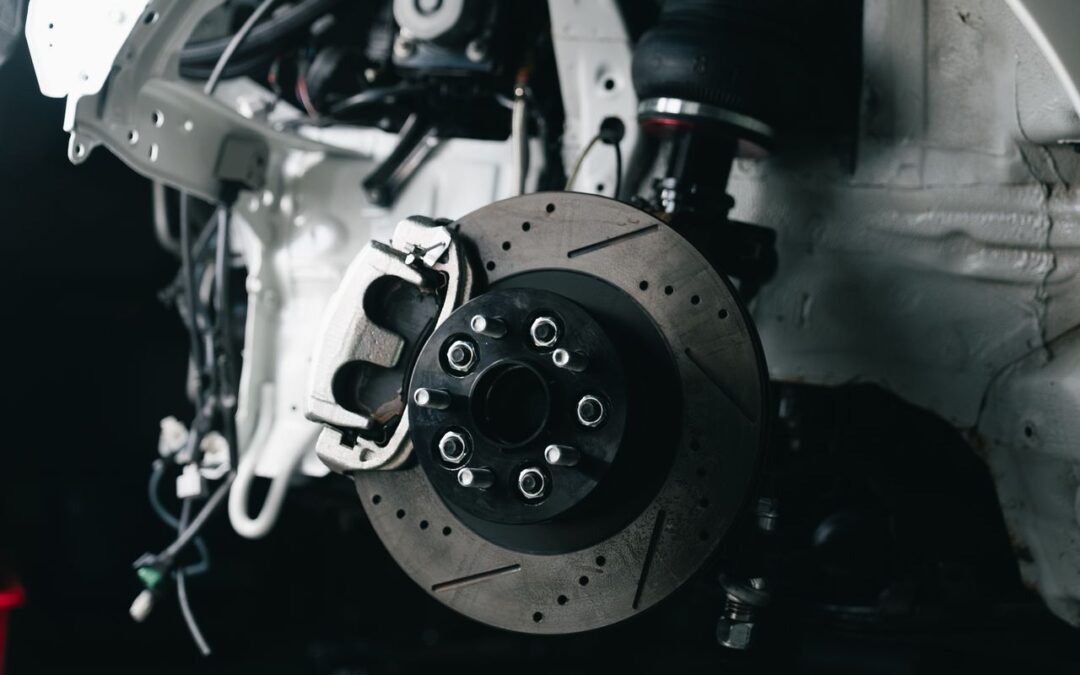
Pedal or steering wheel vibration during braking is a sign of warped rotors — and warped rotors do not self-correct. They get worse under continued heat and braking stress.
Brake rotors can warp when they are exposed to uneven heating and cooling cycles. — typically from prolonged or hard braking. Calgary drivers experience this most often after extended highway driving on Deerfoot or Stoney Trail followed by repeated hard stops in traffic. As the rotor surface becomes uneven, you may feel a pulsing sensation through the brake pedal or steering wheel.
A 2021 study by the Automotive Research Center found that up to 30% of vehicles with a malfunctioning ABS system experienced longer stopping distances — and warped rotors directly interfere with ABS function by creating inconsistent wheel contact during emergency stops (Automotive Research Center, 2021).
Common causes of rotor warping in Calgary:
- Repeated hard braking on Deerfoot or Glenmore Trail during rush hour
- Riding the brake pedal on downhill stretches coming off the escarpment
- Overheated brakes from towing in summer heat
- Worn pads left too long, creating uneven rotor wear patterns
Resurface or replace. Most Calgary mechanics will assess whether rotors can be resurfaced (machined flat) or need full replacement. Resurfacing is only possible if the rotor is above minimum thickness — a measurement your mechanic takes during inspection.
Vibration is a mechanical problem. The next warning sign is a safety emergency.
| If your brakes are vibrating or pulling, do not delay. Mighty Auto Repairs provides auto repair in Calgary with same-day brake inspections for urgent concerns. Call or book online. |
4. Soft, Spongy, or Sinking Brake Pedal
A brake pedal that feels soft, spongy, or travels unusually close to the floor before engaging often indicates a hydraulic problem— and it should be treated as an emergency, not a ‘get it checked soon’ situation.
Your brake system is hydraulic: pressure from your foot travels through brake fluid to activate the calipers at each wheel. A soft pedal means that pressure is leaking somewhere — either through a fluid leak, a failing master cylinder, or air that has entered the brake lines. Any of these conditions means your stopping power is compromised.
According to the Government of Alberta’s winter driving guidelines, brake system integrity—particularly brake fluid condition and brake line integrity—is an important part of pre-winter vehicle inspections. (Government of Alberta Safer Winter Highways 2025). Over time, brake fluid’s boiling point drops as it absorbs moisture. Degraded fluid raises the risk of vapor lock during hard braking in Calgary’s freeze-thaw cycles.
Soft pedal: what to do right now
- Inspect the brake fluid reservoir located beneath the hood— low fluid is an immediate signal of a leak.
- If the pedal sinks to the floor, do not drive the vehicle
- Have the vehicle towed and inspected for master cylinder failure or line leaks
- Brake fluid should be flushed every 2–3 years or per manufacturer schedule
This is the one warning sign on this list that justifies calling a tow rather than driving to the shop.
The next sign is less dramatic but just as worth acting on immediately.
5. Vehicle Pulling to One Side During Braking
If your vehicle pulls left or right when you apply the brakes — and drives straight when you release — the cause is almost always uneven brake force: one side is doing more work than the other.
The most common culprits are a seized caliper (stuck in the applied or released position), uneven pad wear between the left and right sides, or a brake hose that has collapsed internally and restricts fluid flow to one corner. All three create a brake imbalance that compromises vehicle control — especially on wet or icy Calgary roads where the vehicle is already more vulnerable to directional instability.
During the 2025 CVSA Brake Safety Week, Canadian inspectors pulled nearly one in five commercial vehicles off the road for brake-related violations — the highest rate in North America that period. Caliper and hose defects were among the most common issues found. While these inspections target commercial vehicles, the underlying problem brakes quietly deteriorating until they fail a check— is a useful reminder for any driver that brake components rarely announce trouble before it becomes serious.
Signs it is a caliper vs. a hose vs. pad wear:
- Pulling plus burning smell after driving: seized caliper (caliper is stuck applied)
- Pulling with no smell, recent brake job: uneven pad installation or quality difference
- Pulling that worsens on highway speeds: collapsed hose restricting fluid flow
Do not try to correct pulling with counter-steering over time. The underlying cause will worsen — and on a sudden ice patch, that imbalance can take control away from you entirely.
One more warning sign specifically tied to Calgary winters deserves its own section.
6. Brake Warning Light or ABS Light on Your Dashboard
A red brake warning light means your vehicle has detected a brake system fault. An amber ABS light means the anti-lock system is offline. Neither should be dismissed as a sensor glitch without a proper diagnostic scan.
The red brake light may be an indication of a parking brake that is not fully releasing, a hydraulic system malfunction, or low brake fluid, which is frequently a sign of a leak. Ignoring this light can result in brake failure and pose a serious safety risk, according to the NHTSA (NHTSA).
The ABS warning light is particularly critical for Calgary drivers. ABS — anti-lock braking system — prevents wheel lockup on slippery surfaces, allowing you to steer while braking hard. On icy roads, ABS is not a nice-to-have. It is the system that keeps your vehicle steerable during emergency braking on black ice. Driving in Calgary winters with the ABS offline materially increases your stopping distance and eliminates steering control during hard stops.
What each brake dashboard light means:
- Red BRAKE Light: This indicates low fluid, a hydraulic fault, or an engaged parking brake, and requires immediate inspection.
- Amber ABS Light: This signals an ABS module or wheel speed sensor fault, keeping the anti-lock system offline until repaired.
- Red + Amber together: serious brake system fault — do not drive; have the vehicle inspected.
A diagnostic scan at a qualified Calgary auto repair shop takes 15–30 minutes and gives you the exact fault code — far more useful than guessing.
The final warning sign is the one most drivers rationalize away — until they need to stop quickly and cannot.
7. Longer Stopping Distances — Your Vehicle Takes More Room to Stop
If your vehicle feels like it needs more road to stop than it used to — or you are pressing harder on the pedal to get the same result — your brake system has already lost stopping performance.
Increased stopping distance is a symptom that builds up. Worn pads, glazed rotors, deteriorated brake fluid, or a combination of the three can cause it. Unbeknownst to them, Many drivers gradually adapt without realizing it. You may begin slowing down earlier or increasing your following distance to compensate for reduced braking performance. The driver has normalized a braking deficit which the car is making up for.
According to cumingGillespie legal and safety analysis of Alberta winter road conditions (2025), collisions spike dramatically in November and December when first snowfalls arrive — and a vehicle with degraded braking performance entering its first Calgary snowfall of the season is facing maximum risk at exactly the wrong time.
A note from the shop floor: drivers who come in after ignoring multiple warning signs for three or more months frequently face repairs that have escalated from a simple pad swap to a job requiring pads, rotors, and one or both calipers — easily tripling the original repair cost. Catching the squeal at week two versus week fourteen is genuinely that significant.
How to self-test your stopping distance safely:
- Find a quiet, dry, flat stretch of road at low speed (40 km/h)
- Apply the brakes firmly from a consistent point — note where the vehicle stops
- Compare that distance to the same test three months later
- Any meaningful increase warrants a professional inspection
The Bottom Line for Calgary Drivers
Your brakes give you warning signs in a specific order — squeal, then grind, then vibration and pedal changes — and each stage that passes without action increases both your repair cost and your safety risk. Calgary’s winter conditions make a compromised brake system genuinely dangerous, not just inconvenient.
If you hear yourself in any of the seven signs above — act this week, not next month. A brake pad swap caught at the squeal stage is one of the most straightforward repairs in auto repair. Calgary drivers who wait past the grind stage routinely face bills three times higher and, more importantly, reduced stopping ability heading into winter.
| Book a free brake inspection at Mighty Auto Repairs — Calgary’s trusted auto repair shop. Call us or schedule online. Takes 20 minutes. Costs nothing. Gives you a clear answer on where your brakes actually stand. Mighty Auto Repairs is the mechanic near me Calgary drivers rely on for same-day brake inspections and honest diagnostics. |
Frequently Asked Questions About Brake Repair in Calgary
Q: How long do brake pads last in Calgary?
Most brake pads last between 40,000 and 70,000 kilometres, the driving conditions in Calgary reduce that amount. Many Calgary drivers experience wear closer to the 40000–50000 km end due to stop-and-go traffic on Deerfoot and Crowchild and hard winter braking. In most cars, front pads wear more quickly than rear pads. According to My Calgary Mechanic (2025), wear is detected early on by a visual inspection at each oil change.
Q: Is it safe to drive with squealing brakes?
In most cases, yes—but you should schedule a brake inspection as soon as possible and ideally within two weeks. — especially before winter. But the NHTSA advises scheduling inspection promptly, as the window between squeal and metal-on-metal contact can be as short as a few weeks of regular driving. In Calgary, with winter conditions approaching, that window matters. Do not delay past two weeks.
Q: How much does Auto Repair in Calgary cost for brake jobs?
Brake pad replacement in Calgary typically costs between $150 and $300 per axle. Each axle usually costs between $350 and $600 with pads and rotors. Depending on the car, a complete brake service that includes pads, rotors, fluid flush, and inspection can cost from $500 to $800 or more. Because parts are more expensive, European and luxury cars are at the higher end. Without compromising on quality, independent stores typically offer more affordable prices than dealerships (My Calgary Mechanic 2025)
Q: What does it mean when my car pulls to one side during braking?
Pulling during braking indicates uneven braking force between the left and right sides. Most commonly, this is a seized caliper, uneven pad wear, or a collapsed brake hose. The CVSA’s 2025 Brake Safety Week found caliper and hose defects among the top violation categories in Canadian vehicle inspections. Have the vehicle inspected — driving with brake pull on icy Calgary roads removes directional control exactly when you need it most (Commercial Vehicle Safety Alliance, 2025).